How to read the Index
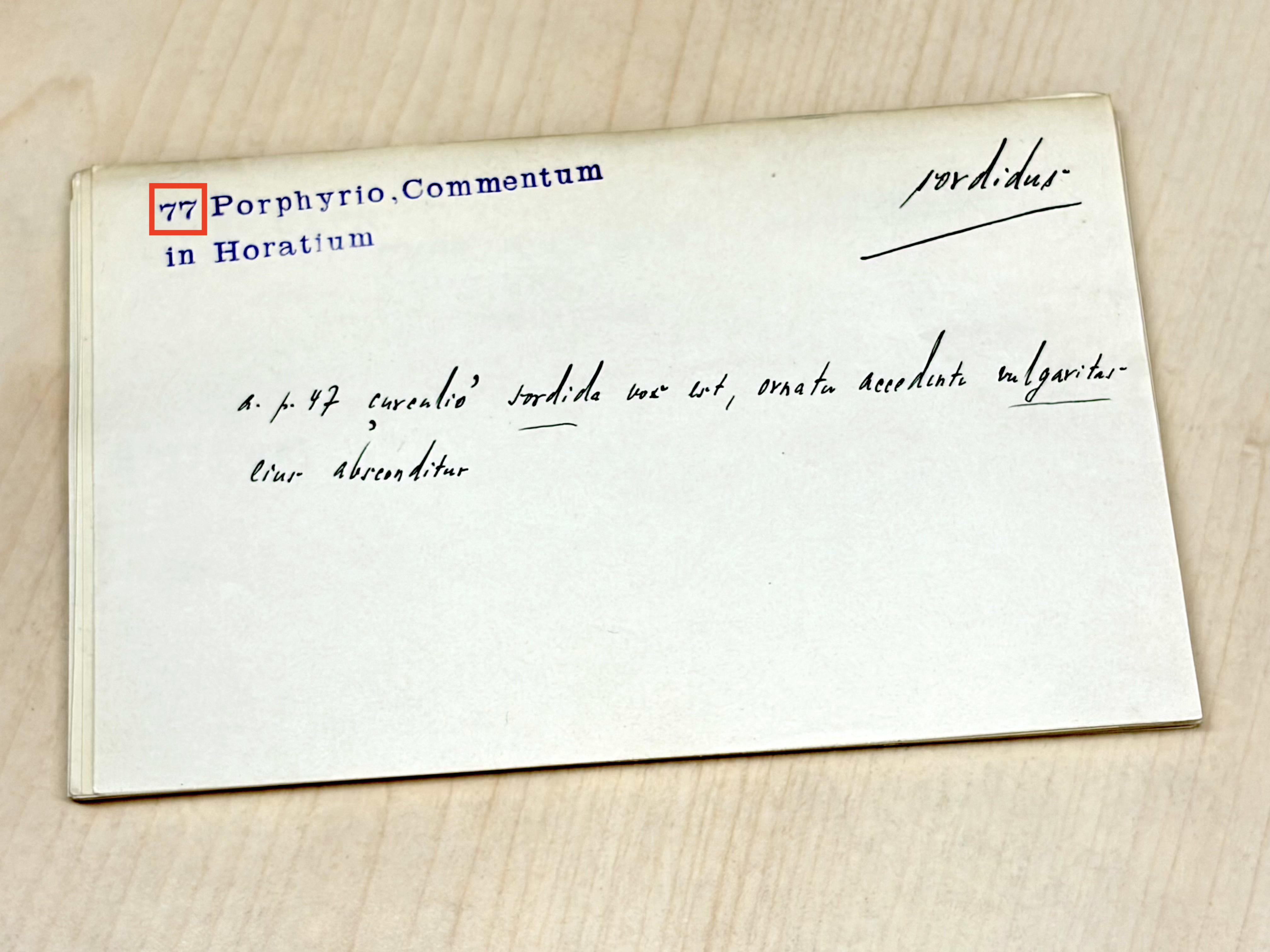
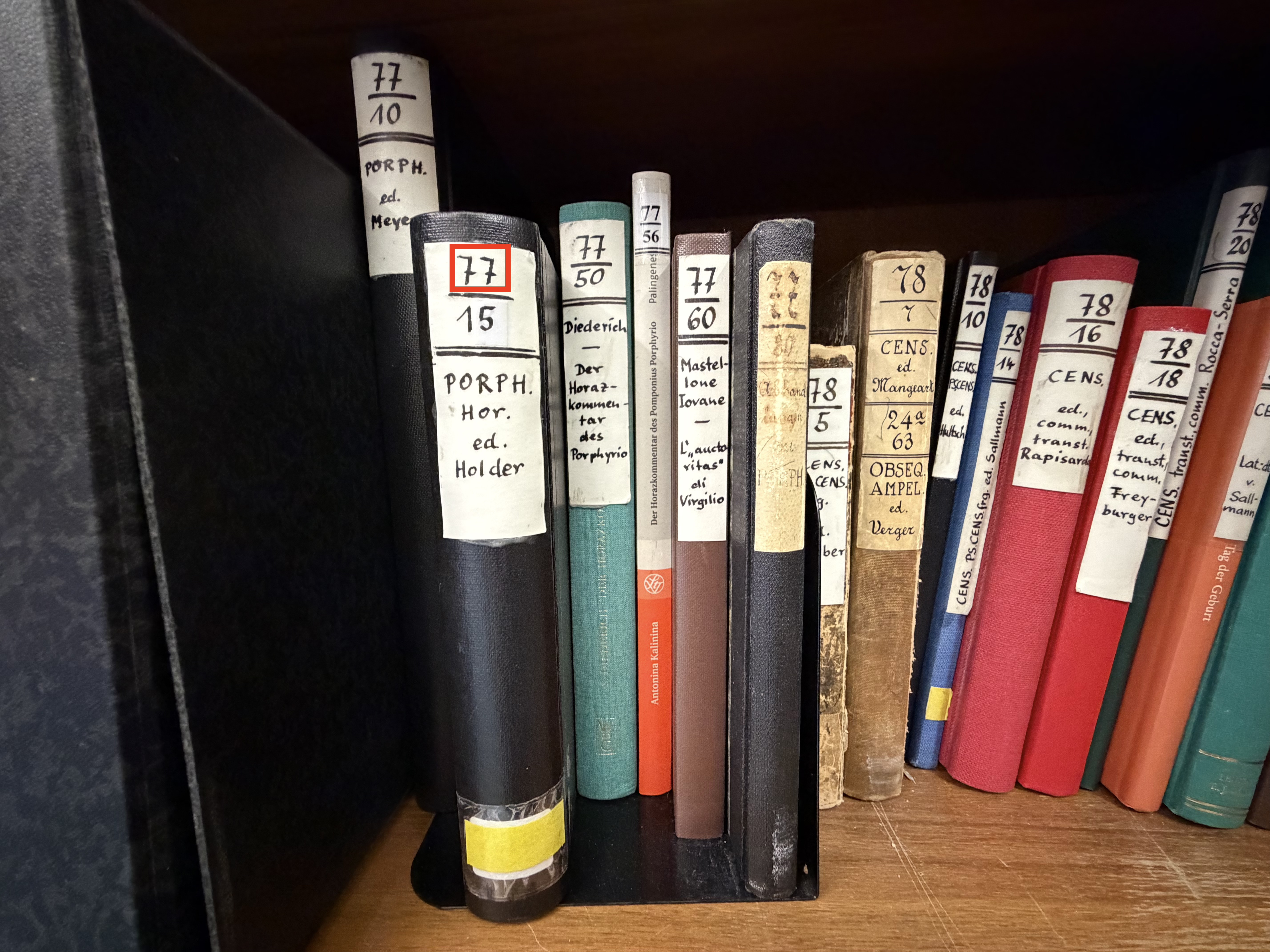
schedarum numeri
This column contains the identification number relevant only for the TLL library.

aetas
This column provides, where possible, the dating of the respective author or work.
notae
Column 3 contains the citation forms currently used in the Thesaurus or those used in the past. They are arranged alphabetically, first according to the uppercase entries, with periods and spaces disregarded (e.g. Atell. after At. Cap.). Different authors or groups of works with identical abbreviations are ordered according to the additions following the uppercase letters (e.g. Gall. carm. before Gall. epigr. and Gall. Fest.). Pseudepigraphic works, contrary to alphabetical order, follow immediately after the authentic works of the author (e.g. Ps. Hil. directly after Hil.).
Under each uppercase entry, the various work entries are arranged alphabetically; prepositions used in them are mostly disregarded (e.g. under Avg., first corrept., then c. Cresc.). Entries consisting only of numbers come before those with letters (e.g. under Avson., first 471, 18, then Mos.).
The examples given refer, with some exceptions, to the last citable unit or the longest possible citation form of a work (e.g. Verg. Aen. 12, 952, i.e. the final verse).
Column 4 indicates – if abbreviations have been changed – either the obsolete citation form (in column 3) next to the current one, or the currently valid citation form (in column 3) next to the obsolete one. Obsolete abbreviations are enclosed in square brackets [Apon. 12, 95].
notarum explicatio
This column explains the abbreviations and numerical references from column 3 and may provide additional information about the author or work, e.g. whether the text is a translation from a Greek original or was itself translated into Greek already in antiquity.
For Christian authors, the abbreviation B is followed by the siglum from the citation list of the Beuron Vetus Latina edition (R. Gryson, Répertoire général des auteurs ecclésiastiques latins de l'antiquité et du haut moyen âge, Freiburg: Verlag Herder, 2007). The Beuron index provides further information, including the number in the Clavis Patrum Latinorum and — for translations from Greek — the Clavis Patrum Graecorum.
“cf. B” means that the content to which the Thesaurus abbreviation refers does not completely correspond to that of the Beuron siglum.
editiones
This column lists the authoritative edition(s). After “cf.” it may also mention a more recent edition that cannot or does not intend to replace the older edition(s). The abbreviation “gr.:” introduces the edition of a Greek text from which the Latin text was directly translated, or an edition of a Greek translation of the Latin text.
“cf. gr.:” refers to editions of otherwise related Greek texts.